Oat Milk Line Changeover and QC Checks for Viscosity-Sensitive Products
For oat milk factories, changeover is not just a sanitation checkpoint. It is a viscosity reset.
A line that ran a barista oat base in the morning and a low-fat or flavored variant in the afternoon can carry forward more than flavor residues. It can carry process drag: partially hydrated oat solids, warm starch films, beta-glucan-rich hold-up, enzyme carryover risk, filtration loading, and small shifts in mouthfeel that only show up after heat treatment or homogenization.
Enzymesboost supports oat milk manufacturers with enzyme systems designed for controlled liquefaction, stable viscosity development, improved filtration behavior, and repeatable sensory texture. As an enzyme supplier for oat milk production, we look at changeover through the same lens your process team does: how quickly the line returns to a predictable operating window.
Why viscosity-sensitive oat products need tighter changeover discipline
Oat milk is unusually sensitive to upstream variation because the product structure is built during processing. Hydration, milling, enzyme treatment, separation, heat exposure, and shear all influence the final flow profile.
During changeover, small residues or condition drift can create visible production problems:
- Slower transfer from mix tank to enzymatic conversion hold
- Higher pump load and inconsistent flow through heat exchangers
- Separator or filter performance loss from overloaded insoluble solids
- Batch-to-batch variation in body, gloss, and pour behavior
- Sedimentation risk after thermal processing
- Troubleshooting loops that consume operator time and finished-product capacity
The goal is not to overcomplicate QC. The goal is to identify the checks that show whether the next batch will run cleanly before the line is fully committed.
The changeover risk points that matter most
1. Oat slurry preparation surfaces
Oat slurry leaves behind hydrated solids that can swell, thicken, and adhere to stainless surfaces. If these deposits remain in low-flow zones, they can release into the next batch and create localized viscosity spikes.
Practical checks:
- Confirm no grainy buildup remains around tank manways, agitator hubs, recirculation loops, and bottom outlets
- Verify that rinse discharge clears from cloudy oat suspension to a visually clean flow
- Inspect strainers and inline screens for hydrated flakes or gelled material
- Confirm that mix tank temperature has returned to the intended starting range before charging the next formulation
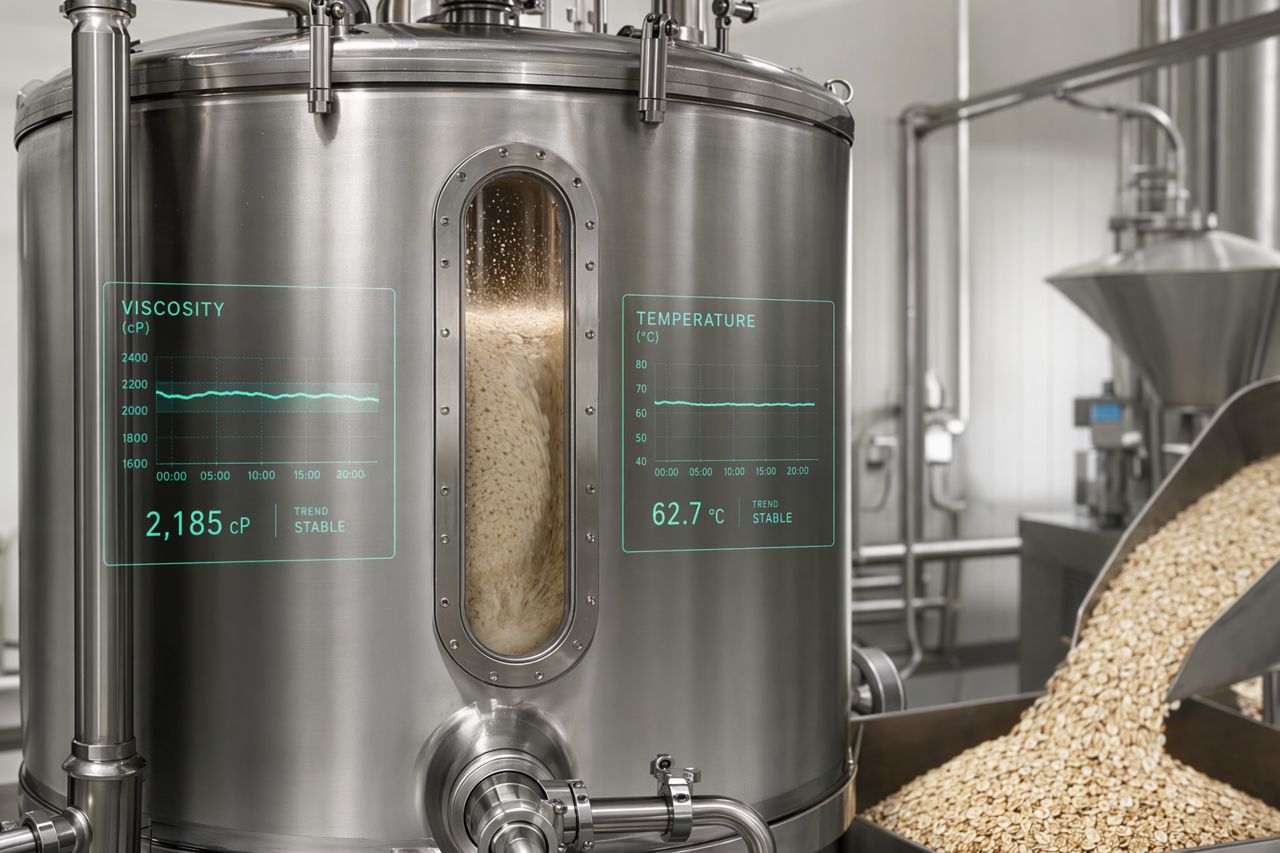
For viscosity-sensitive SKUs, the tank may look clean but still behave as if it is not. Watch first-transfer pump load and early recirculation flow. These are often the first operational signals of residual thickening material.
2. Enzyme dosing and hold-step readiness
Enzyme performance in oat milk production depends on controlled contact between substrate, temperature, residence time, and mixing. A changeover that leaves the dosing line, injection point, or hold section in an uncertain state can push the next batch outside its target viscosity path.
Practical checks:
- Confirm the enzyme feed path is flushed and isolated according to the intended SKU sequence
- Check that the dosing pump, injection quill, and line connections match the active production recipe
- Verify that hold-tank agitation is stable before enzyme addition
- Confirm residence-time assumptions against actual tank level, recirculation route, and transfer sequence
- Record the first viscosity trend after enzyme contact rather than relying only on end-of-hold confirmation
The most useful QC question is simple: is the batch thinning in the expected direction at the expected point in the process? If not, the line should pause before downstream equipment absorbs the variation.
3. Heat exchanger and thermal hold sections
Oat solids and starch-derived components can leave deposits in warm sections of the line. Even a thin film can alter heat transfer, increase pressure drop, and change the thermal history of the next batch.
Practical checks:
- Compare start-up pressure drop against the known clean-line baseline
- Confirm temperature approach is stable before product release
- Monitor for delayed heat-up that may indicate fouling or flow restriction
- Check that product exits the thermal section without cooked notes, dull color, or unexpected thickness
When an oat milk line is fighting viscosity, downstream heat treatment often magnifies the issue. A batch that seems only slightly heavy before heat can become noticeably draggy after heat and cooling.
4. Separation, filtration, and insoluble solids control
Filtration and separation are where changeover weaknesses become visible. Carryover solids, incomplete liquefaction, or a thickened feed can reduce flow and force operators into slower processing or repeated interventions.
Practical checks:
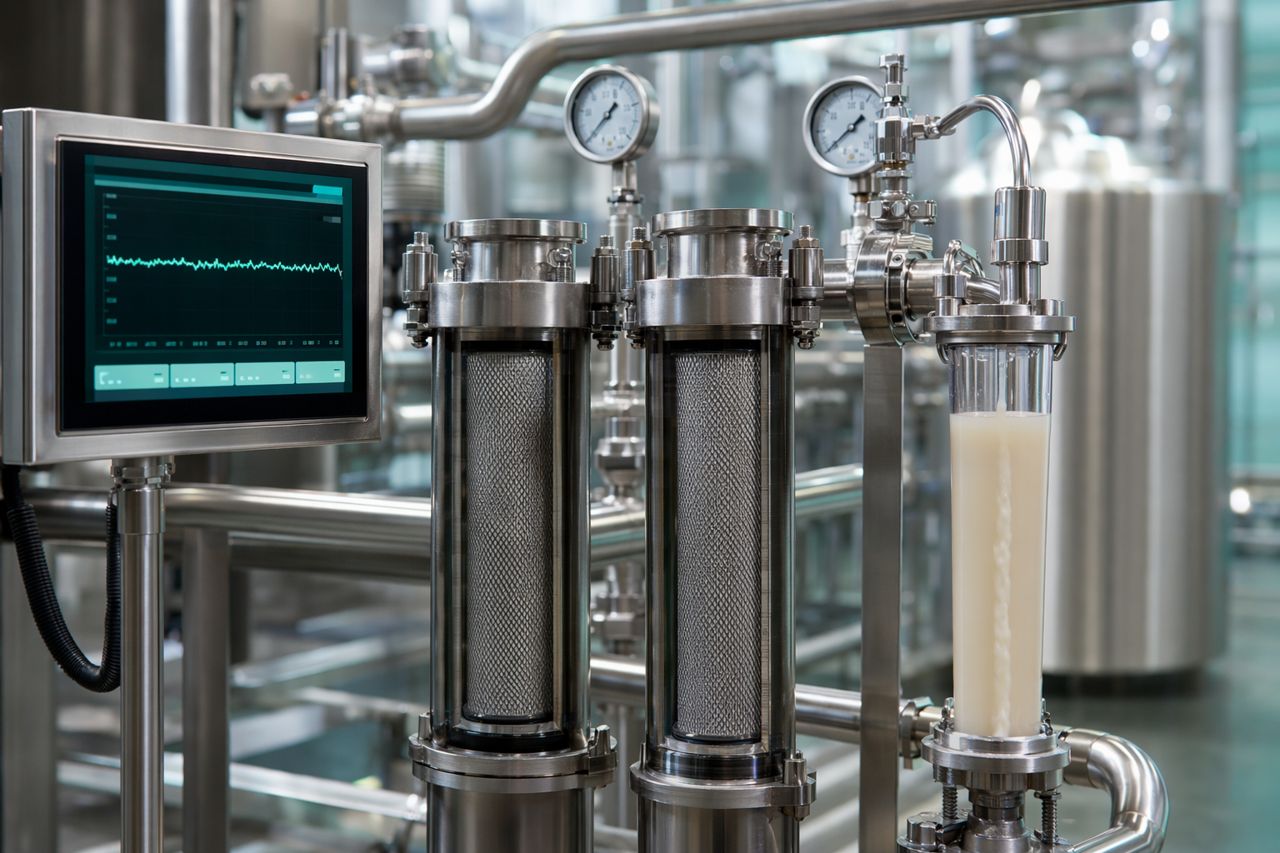
- Establish a clean baseline for separator feed pressure, filter differential pressure, and flow rate
- Inspect the first retained solids for unusual gel, grit, or compacted oat material
- Track whether pressure rise is gradual and predictable or sudden and unstable
- Compare yield and retained solids volume against the previous approved run of the same SKU
Good enzyme control helps the oat matrix move through separation with less resistance. Good changeover confirms that the equipment is ready to show that performance.
A practical QC sequence before releasing the next oat milk batch
A plant-floor changeover checklist should be short enough to use and specific enough to prevent avoidable rework.
Pre-start checks
- Correct SKU recipe loaded and verified by production and quality
- Product-contact surfaces visually clear of oat deposits
- Mix tank, transfer line, hold tank, and dosing path assigned to the correct production route
- Temperature control loop stabilized before oat charging
- Inline screens, strainers, and filters inspected or replaced according to the run plan
- Dosing system primed, labeled, and confirmed for the intended enzyme solution
First-batch confirmation checks
- Slurry hydration is uniform before enzyme addition
- Initial viscosity trend matches the expected product family
- Pump amperage and transfer flow are within the clean-line operating window
- Hold time and temperature are recorded against actual batch movement, not only setpoints
- Separation or filtration pressure rise is controlled and predictable
- Post-process mouthfeel sample shows the intended body without graininess or gumminess
Release-to-run checks
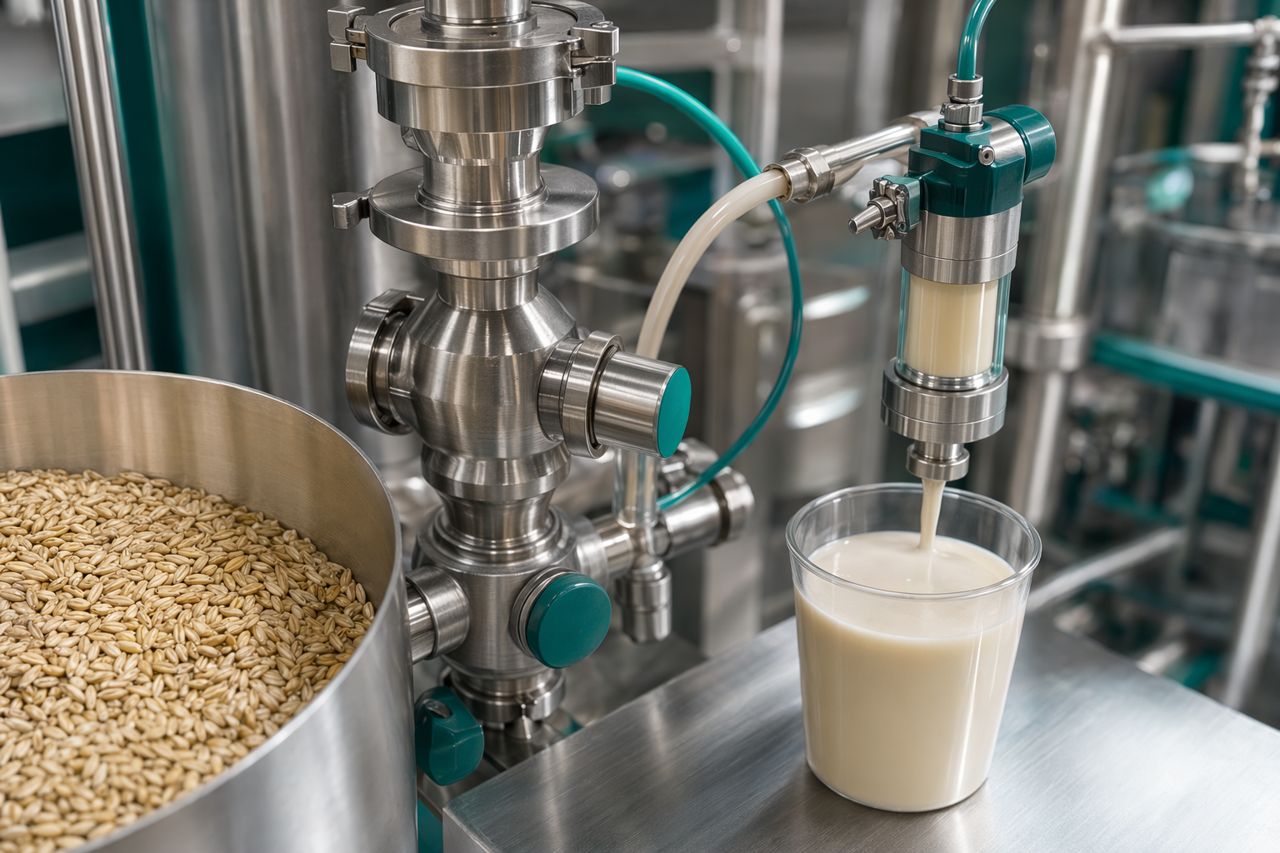
- Finished base matches the approved appearance: smooth, clean, and stable
- No unexpected sediment or flocculation is visible after short hold observation
- Flow behavior is consistent across the first transfer, heat treatment, and final tank fill
- Yield, retained solids, and troubleshooting interventions are documented
- Any deviation is linked to a probable process point before the next batch begins
Matching enzyme strategy to changeover reality
The best enzyme program is not only effective under ideal lab conditions. It must be robust on a real production line where oat lots vary, operators work against schedule pressure, and equipment conditions shift across the week.
Enzymesboost helps oat milk factories define enzyme solutions around production outcomes:
- Faster and more controlled viscosity reduction during oat slurry processing
- More predictable separation and filtration behavior
- Smoother mouthfeel without a thin or watery finish
- Reduced batch drift between oat lots and production shifts
- Fewer operator interventions during transfer, heat treatment, and clarification
- Cleaner scale-up from trial runs to continuous factory production
For changeover planning, this means selecting an enzyme approach that gives operators a clear process window rather than a fragile target.
Common changeover signals that point to enzyme or process mismatch
Not every line issue is an enzyme issue. But viscosity-sensitive oat milk products often show recognizable patterns when the process window is too narrow.
| Plant-floor signal | Likely operational impact | What to review |
|---|---|---|
| Slurry remains heavy longer than expected | Slower transfers and overloaded downstream equipment | Hydration, temperature, enzyme contact, mixing intensity |
| Filter pressure rises early | Shorter run time and more cleaning interruptions | Insoluble solids load, liquefaction profile, screen condition |
| Finished base tastes clean but feels gummy | Customer rejection risk for texture | Starch and beta-glucan breakdown balance, heat history |
| Batch looks smooth before heat but thickens after | Inconsistent final mouthfeel | Thermal section fouling, conversion endpoint, formulation interactions |
| Same recipe behaves differently by shift | Troubleshooting time and yield variability | Dosing verification, residence time, oat lot variation, operator sequence |
A strong QC routine does more than reject bad batches. It creates feedback that improves the next changeover.
Where Enzymesboost fits in the factory conversation
Enzymesboost supplies enzyme solutions for oat milk production teams that need commercial reliability, not generic ingredient claims. We work with process managers, technical teams, and procurement groups to connect enzyme selection with measurable factory value: throughput, viscosity control, filtration stability, yield consistency, and sensory repeatability.
If your oat milk line is losing time during SKU changeovers, showing inconsistent viscosity after heat treatment, or requiring too much manual adjustment at filtration, the enzyme strategy may need to be tuned to the actual line conditions.
Request a quote
Planning a new oat milk line, improving an existing process, or qualifying an alternative enzyme supplier for oat milk production?
Use the on-site request a quote form and share your product type, process flow, target mouthfeel, key bottleneck, and current changeover challenge. Enzymesboost will respond with a practical supply recommendation for your production environment.